The Beautiful Art of Being Fooled
Nairobi’s Museum of Illusions
A place where your eyes can deceive you and curiosity takes over
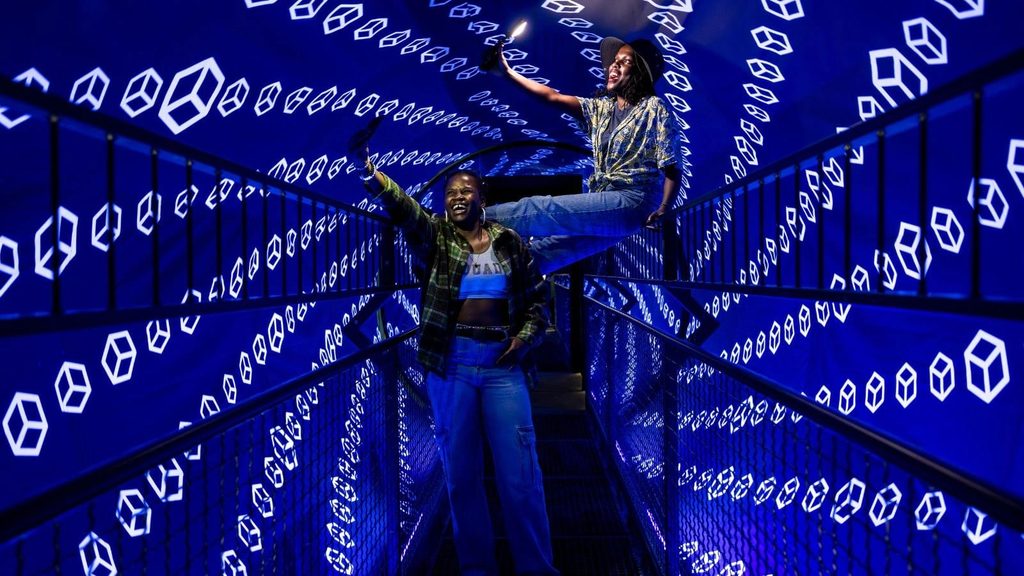
Visitors capture the moment as they navigate the Vortex Tunnel at Nairobi’s Museum of Illusions. Photo credit: Museum of illusions Nairobi Website
By Grace Anyango
Imagine walking into a room where the floor seems to tilt beneath your feet, making you appear smaller, or where a photograph can make the impossible look believable. Your eyes tell you one story while your brain struggles to make sense of what it sees. There is something fascinating about being fooled, especially when you are having fun with it.
Located along Swaminarayan Road in Parklands, Nairobi’s Museum of Illusions is an attraction that offers entertaining and puzzling visual experiences, combining science, art and entertainment.
With more than 60 exhibits designed to challenge visual perception, encourage curiosity and question reality, the museum invites visitors to question what they see and discover how easily their senses can be tricked.
THE STORY BEHIND THE EXPERIENCE
Where education meets wonder
The global Museum of Illusions concept began in Zagreb, Croatia, in 2015. Its founders, Roko Živković and Tomislav Pamuković had the vision of the museum creating a space where education meets entertainment through interactive displays, optical illusions and immersive experiences. They wanted people to become part of the experience itself, allowing them to learn, explore, participate and play.
This idea eventually found its way to Nairobi, adding a different dimension to the city’s recreational and tourism landscape. The museum opened its doors to the public on 25 January 2025, introducing an internationally recognised attraction to East Africa.
The museum has incorporated elements of Kenyan creativity through collaborations with local artists, whose contributions give it a local identity while retaining the playful spirit of its international concept. Among them are Moha, who is popularly associated with matatu culture, Lulu Kitololo, a visual artist, and Brian Omolo, a muralist.
One of the attractions is the Tilted Room, where carefully constructed angles create the impression that the floor and surrounding environment are not quite level. What seems like an ordinary room becomes a playful challenge to one’s sense of balance.
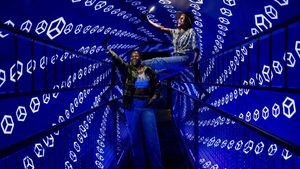
Imagine stepping into a passage surrounded by rotating visual patterns. That is the Vortex Tunnel. The surrounding visuals create the impression that the entire environment is spinning, making even walking in a straight line feel like an adventure.
For those who enjoy unusual photographs, the Reversed Room offers an interesting experience by turning familiar surroundings upside down and challenging visitors’ understanding of what is normal. Other installations, such as the Cloning Table, Head on a Platter and Beuchet Chair, make people appear duplicated, separated or dramatically different in size.
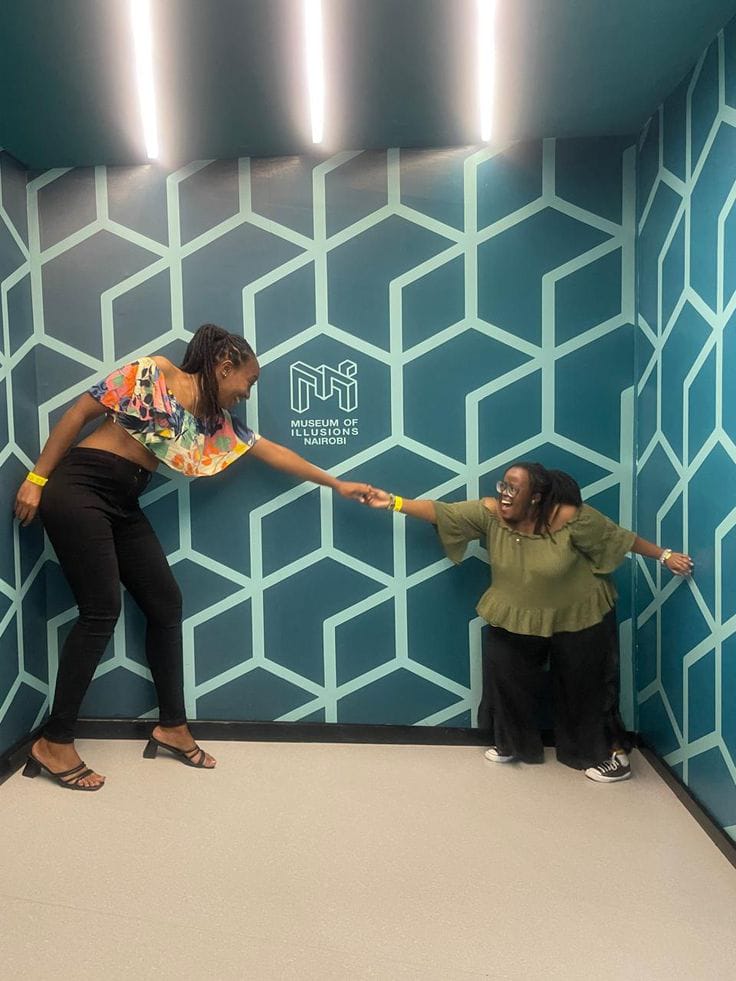
One visitor appears remarkably smaller than expected inside the Ames Room. Photo credit:Museum of Illusions Nairobi Website.
INSIDE ILLUSIONS
Rooms that challenge reality
The museum also features holograms, stereograms and other visual displays that demonstrate how light, patterns and perspective influence what people see. The installations encourage visitors to look closely, move around, interact with objects and experiment with different viewing angles, making the experience particularly engaging.
Beyond the science of its installations for many visitors. It gives them an opportunity to take unusual photographs, laugh with friends and create memorable moments. A BestKenya page reproducing Google review excerpts includes a review attributed to Maria Mutauta, dated 17 December 2025, describing how her fiancé proposed in the Infinity Room. Another review attributed to David Pinney describes the attraction as fun and educational and praises the staffs assistance.
The interactive nature of the exhibits is reflected in how visitors engage with them. They do not simply walk past the displays. Instead, they take photographs, experiment with positioning and discover the tricks behind the images. According to the museum’s website, a typical visit takes approximately 45–90 minutes, although this varies depending on how much time visitors spend exploring the installations.
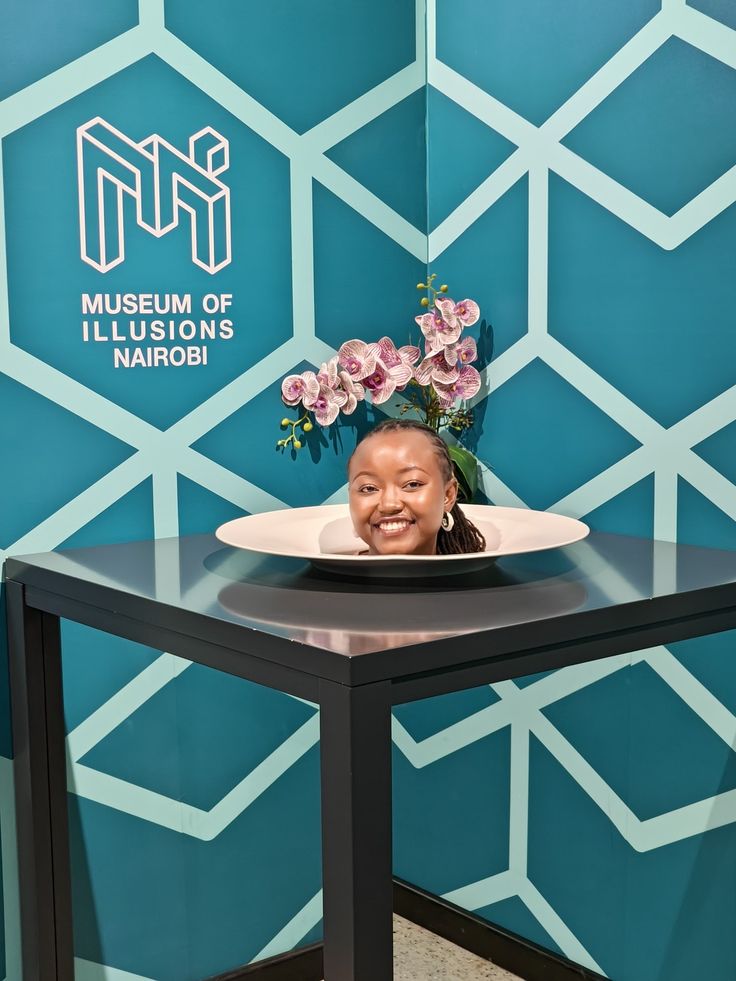
A visitor appears to have their head served on a platter, creating a playful visual trick. Photo credit: Museum of Illusions Nairobi Website.
“Seeing is not always believing”
THE SCIENCE OF WHAT WE SEE
Why our eyes believe the impossible
Why do these illusions fool us? The answer lies in the fascinating relationship between the brain and the eyes. In his scholarly article “Visual illusions and neurobiology”, neuroscientist David M. Eagleman explains how visual illusions can reveal the complexity of the human visual system. Seeing is not simply a matter of the eyes recording everything in front of us; the visual system processes information in ways that can sometimes produce a perception different from physical reality.
Therefore, illusions offer more than entertainment. They help us understand how the human brain constructs our perception of the world. What appears impossible may simply be the result of visual information being interpreted in an unexpected way.
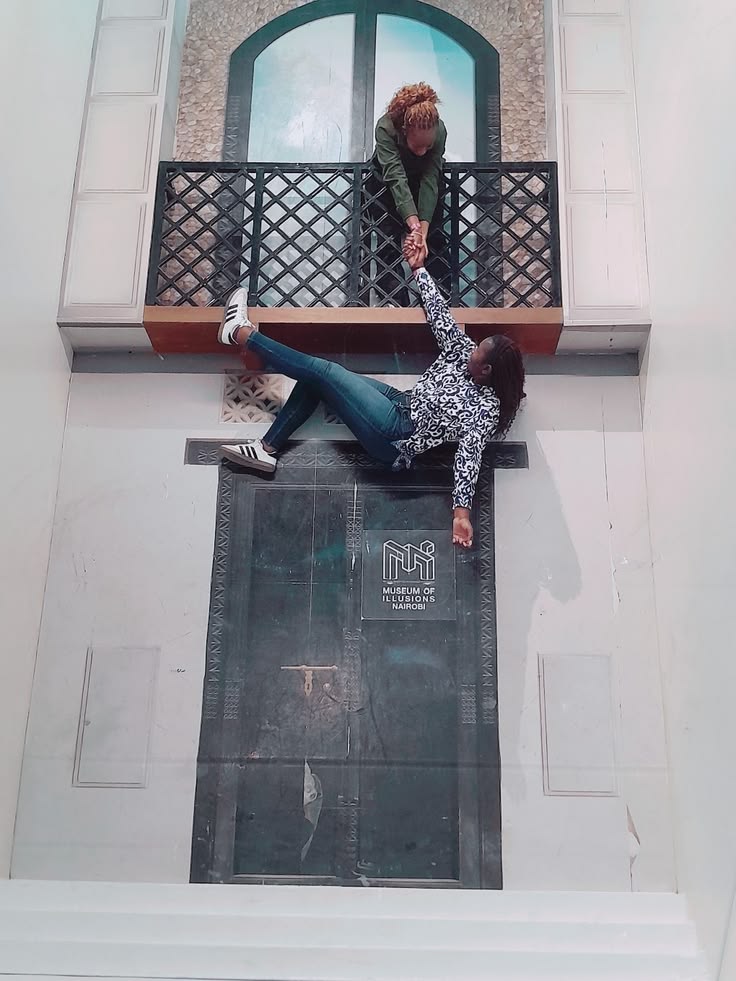
What appears to be a dramatic fall from a building becomes a playful illusion, demonstrating how perspective can transform an ordinary photograph into an extraordinary scene. Photo credit: Museum of Illusions Nairobi Website.
A PLACE FOR LEARNING AND CONNECTION
Beyond its recreational appeal, the museum also presents educational opportunities. Its interactive displays introduce concepts in physics, mathematics, psychology and visual perception in an engaging environment. Schools can use these experiences to enhance learning. The museum also hosts birthday celebrations, group visits and private events, making it a suitable destination for social gatherings.
THE FINAL ILLUSION
In a world where we constantly try to make sense of everything, the Museum of Illusions gives people permission to be fooled, which makes it fascinating. Confusion becomes entertainment, disbelief becomes laughter and curiosity becomes an experience worth sharing.
It might be one of those places where you arrive trusting your eyes and leave questioning everything they have ever shown you. If there is one thing the Museum of Illusions promises, it is that seeing is not always believing.