SMILES OUTSIDE BATTLES WITHIN. The hidden mental health crisis among university students in Kenya.
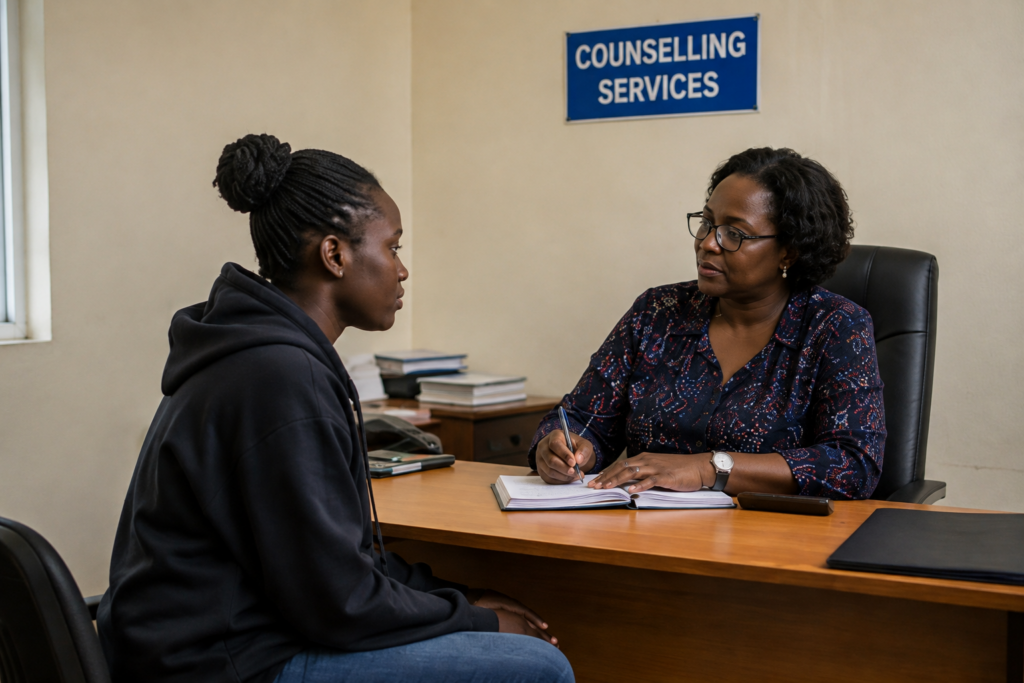
A photo of a university student being guided by a counsellor during a guidance session, photo by Susan Muigai.
The tears always came at night.
When lectures ended and campus became quiet, Amina would return to her hostel room and cry herself to sleep. During the day, she appeared like any other university student attending lectures, laughing with friends and completing assignments. But behind the smile was a struggle few people knew about.
“I would cry myself to sleep almost every night. I felt trapped. The pressure was overwhelming, and I didn’t know who to talk to,” she says.
For months, Amina kept her struggles to herself. It was only after opening up that she discovered she was not alone. Her experience reflects a wider mental health challenge facing university students in Kenya.
Academic pressure, financial difficulties, family expectations, relationship problems, social media comparisons and uncertainty about employment are leaving many students emotionally overwhelmed.
A Growing Problem
The World Health Organization says mental health is an essential part of overall well-being and notes that many mental health conditions begin during adolescence and early adulthood the same period when many young people enter higher education.
In Kenya, the Mental Health Policy 2015–2030 and Mental Health Action Plan 2021–2025 recognize the need to strengthen mental health services. However, stigma, limited resources and inadequate access to professionals continue to prevent many people from receiving support.
A 2025 study involving 1,424 students at Pwani University found that 30.9 per cent screened positive for a mental health condition, highlighting the scale of the challenge in institutions of higher learning.
A reminder on the importance of mental health to academic performance, photo by Susan Muigai.
Students Struggling in Silence
A questionnaire conducted for this investigation among university students from different institutions across Kenya revealed worrying experiences.
Nearly eight in ten respondents (78.6 per cent) said they had experienced stress, anxiety or depression during their university studies, while 64.3 per cent said they had never sought professional mental health support.
Stigma emerged as the biggest barrier, with many students saying they feared being judged, labelled or misunderstood.
One respondent described mental health as “underrated such that no one really takes it seriously.” Another wrote, “Most students are fighting depression silently.” A third simply wrote, “Anxiety about the future.”
The Pressure to Succeed
For Brian, a third-year student, academic expectations became overwhelming.
“There was a time I would study all night because I was afraid of failing. If I got a low grade, I felt like I had failed my entire family,” he says.
For many Kenyan students, university education represents years of sacrifice by parents and guardians. Failure can therefore feel like more than an academic setback it can feel like failing the people who invested in their future.
A guidance and counselling lecturer says students are increasingly seeking help for anxiety, depression, stress, grief, relationship difficulties, financial problems and academic burnout.
“The situation is more serious than many people realize. We have seen an increase in students seeking help,” the lecturer says.
However, the demand for counselling is growing faster than available resources. In some institutions, one counsellor may be expected to serve thousands of students.
What Students Want
Students say universities must move beyond occasional awareness campaigns and make mental health support part of everyday campus life.
Respondents recommended employing more professional counsellors, providing affordable therapy, strengthening peer-support groups and creating confidential or anonymous platforms where students can seek help.
The guidance and counselling lecturer agrees that universities need a more comprehensive approach.
“Mental health should be integrated into student orientation and campus life so that seeking help becomes a normal part of maintaining well-being,” the lecturer says.
The lecturer also urges students to pay attention to changes in behaviour, including withdrawal, poor academic performance, loss of interest, anxiety or unusual irritability.
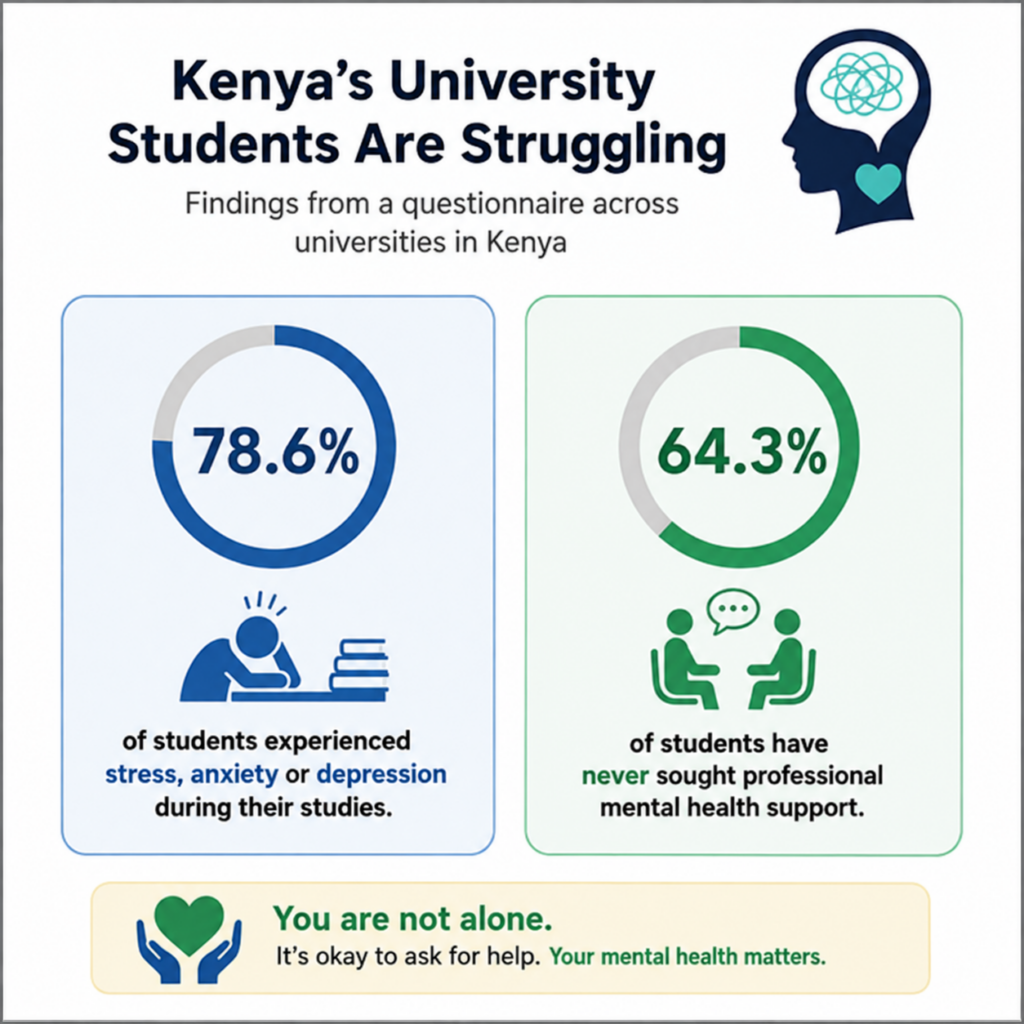
An infographic showing findings from a questionnaire across universities in Kenya, generated by Susan Muigai.
A Message of Hope
For Amina, recovery began when she finally told someone what she was experiencing.
“I thought I was alone. Then I realized many students were experiencing the same thing,” she says.
Her story offers a message to thousands of students silently carrying their own burdens: asking for help is not a sign of weakness.
Behind the lecture halls, assignments and graduation dreams are students fighting battles that may not be visible.
Kenya’s universities now face a crucial question: Will mental health support become a central part of student life before more students are forced to suffer in silence?







Dear universities: Awareness posters are NOT mental health support.
We need therapists. We need peer groups. We need help.
Spectacular journalism in display here.
Everyday life in Campus need a well balanced mental story, I loved how you wrote the story
Indeed universities need to improve and get serious on guiding and counselling to cub mental health
Having had a similar experience at the same level, its a matter of constant conversation