Oil prices shock: Why Kenya’s high cost of living could be far from easing
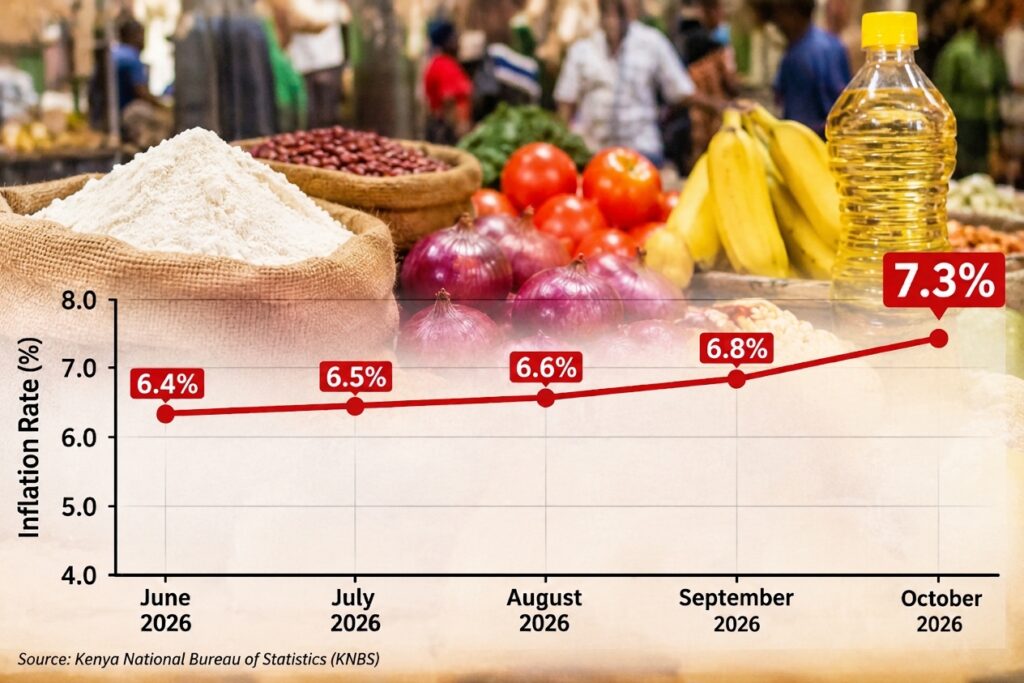
A visual representation of Kenya’s rising inflation. PHOTO/MAGNIFIC
The war between the United States and Iran is increasingly becoming a cost-of-living crisis for Kenyan households.
The rising oil prices stemming from the conflict is threatening to keep fuel, transport and essential commodity costs elevated even as consumers struggle to absorb successive price increases.
Nearly eight months after the conflict began on February 28, international oil markets have remained unsettled, with diplomatic efforts offering little assurance of a lasting resolution.
The latest rally has pushed Brent crude above $113 (Sh14,684) per barrel as at the end of October, extending a price shock that is increasingly finding its way into Kenya’s economy.
Brent crude is a major international benchmark used to price oil produced in the North Sea and serves as a reference for much of the crude oil traded globally.
Its price is closely watched because it influences the cost of imported petroleum products, including petrol and diesel, and can affect fuel prices, transport costs and inflation in countries such as Kenya, which relies on imported refined petroleum products.
For households, the consequences are already visible.
Motorists are paying more to fill their tanks, matatu operators have raised fares, businesses face higher distribution expenses.
Consequently, the headline inflation has climbed to a three-year high of 7.3 per cent in October, according to the latest figures by the Kenya National Bureau of Statistics (KNBS).
With Washington and Tehran showing little indication of reaching a lasting settlement, the prospect of cheaper fuel and meaningful relief for consumers remains uncertain.
Benchmark oil prices before and after the war
Before the conflict erupted on February 28, Brent crude, the international benchmark, was trading at approximately $70 (Sh9,097) per barrel.
By October 9, the benchmark had climbed to about $104 (Sh13,511), representing a 49 per cent increase from its pre-war level.
The rally has since accelerated. On Monday, October 23, Brent crude futures settled at historic $117.00 (Sh15,204) per barrel before easing to $113 (Sh14,684) by the end of the month.
The $117 mark takes the increase to approximately 68 per cent compared with the pre-war price.
This means that a barrel of crude that cost about Sh9,097 before the conflict now commands roughly Sh15,204, an additional Sh6,194.
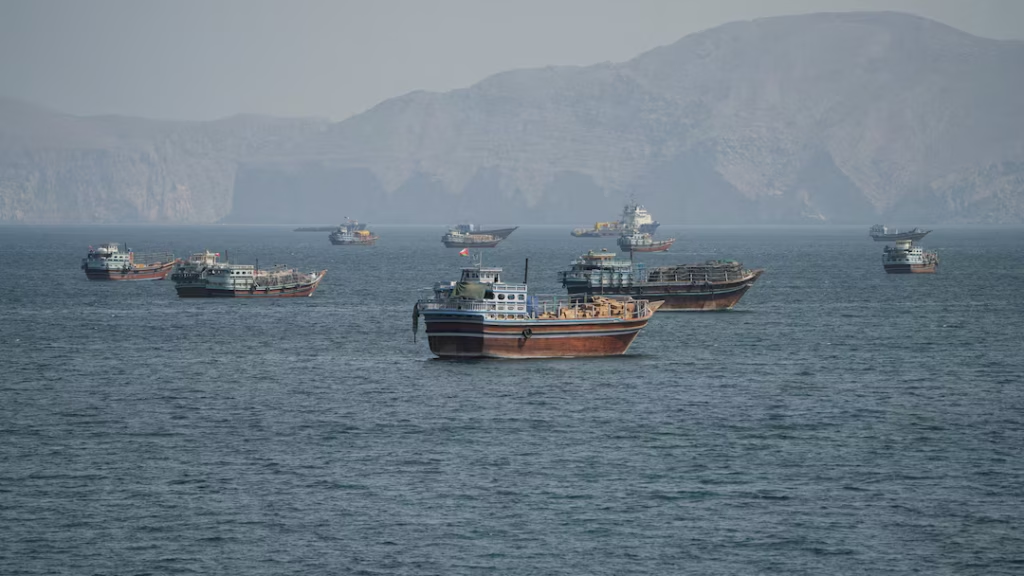
The latest rally follows renewed fears of military escalation, attacks on shipping and energy infrastructure, and continuing uncertainty surrounding the Strait of Hormuz, a strategic waterway through which a significant share of global petroleum supplies passes.
In October alone, Brent crude gained 13.6 per cent, with traders increasingly pricing in the possibility of prolonged disruptions to oil shipments.
The price movement has been far from linear. There were periods of easing when diplomatic signals raised hopes of a breakthrough, but subsequent attacks and renewed tensions repeatedly reversed those gains.
In September, prices crossed the $100 mark for the first time since July, raising concerns about the impact on Kenya’s next monthly fuel review.
By October 9, Brent was trading at $104, approximately 49 per cent above its pre-war level, despite diplomatic signals suggesting that Washington and Tehran could pursue negotiations.
The subsequent climb above $117 underlines how fragile those hopes have been and how quickly geopolitical developments can reverse improvements in the oil market.
Future outlook remains uncertain
The immediate concern is that the conflict is showing few signs of a lasting resolution, leaving international energy markets vulnerable to further supply disruptions.
The Strait of Hormuz remains a critical pressure point because any prolonged interruption to shipping through the waterway threatens the movement of crude oil and refined petroleum products from major Gulf producers.
Even when crude shipments recover, the availability of refined products such as diesel does not necessarily return at the same pace.
The International Energy Agency (IEA), in its October Oil Market Report, warned that global oil inventories had fallen by 509 million barrels compared with levels at the end of February, reflecting the scale of supply disruptions and stock withdrawals since the conflict began.
The agency also reported that global diesel exports in September were 700,000 barrels per day lower than a year earlier, with reduced supplies from Russia and the Middle East contributing to the shortfall.
More importantly, the IEA expects diesel markets to remain tight well into 2027, with replenishment of depleted inventories unlikely before the second half of next year.
“Record diesel prices are already having broad economic consequences by raising the cost of goods and impacting real incomes, economic activity, and inflation,” IEA said in the report.
Although refinery operations are expected to recover towards the end of 2026, the agency warns that available supplies could still fall short of demand in the final quarter.
It also cautions that without a resolution to the Middle East conflict, oil markets could experience further volatility before a potential supply surplus emerges in 2027.
Market experts have since argued that this presents a difficult outlook for oil-importing economies such as Kenya.
“Even if international crude prices begin to ease, shortages of refined products, expensive shipping and elevated insurance costs could delay the transmission of relief to domestic fuel markets,” said economist Mihr Thakar.
Other conflicts adding pressure to oil prices
Beyond the US-Iran war, renewed hostilities between Russia and Ukraine are adding further uncertainty to global oil markets, raising the risk of supply disruptions and higher prices.
Ukraine’s attacks on Russian oil refineries and energy infrastructure have threatened the country’s ability to process and export petroleum products, while Russian strikes on Ukrainian energy facilities have deepened concerns over regional energy security.
On October 30, Ukraine reportedly launched a drone strike on Russia’s Novokuybyshevsk oil refinery in the Samara region, triggering fires at the facility.
On November 1, another overnight drone attack damaged an industrial facility in Russia’s Nizhny Novgorod region, with Ukrainian sources claiming the Kstovo oil refinery had been targeted.
The attacks threaten to disrupt Russia’s refining capacity and exports of petroleum products, particularly diesel, at a time when global fuel markets are already under pressure from the Middle East conflict.
Russia is a major player in global energy markets, ranking among the world’s largest oil exporters.
Its crude oil exports averaged five million barrels per day between 2020 and 2024, making it a significant supplier to international markets.
Any prolonged disruption to its refinery operations could therefore tighten supplies and sustain upward pressure on international fuel prices.
The IEA has already warned that reduced exports from Russia and the Middle East are contributing to tighter diesel markets.
The IEA warns of mounting pressure in global diesel markets as supply disruptions raise concerns over availability and prices.
For oil-importing countries such as Kenya, the combined effect of the two conflicts is a prolonged period of uncertainty over the cost of imported fuel.
Even when crude oil prices retreat following signs of diplomatic progress in one conflict, renewed attacks or supply disruptions in another region can reverse the gains.
This makes a sustained decline in global oil prices less certain and leaves Kenya exposed to higher fuel import costs, which can eventually feed into pump prices, transport fares and the cost of goods.
Russia’s war against Ukraine, which began with Moscow’s annexation of Crimea and fighting in eastern Ukraine in 2014, escalated into a full-scale invasion on February 24, 2022, triggering one of the biggest shocks to global energy markets in recent years.
Brent crude, which was already trading at about $97 (Sh12,605) per barrel before the invasion, surged above $100 (Sh12,995) and reached $127 (Sh16,503) on March 8, 2022, as traders feared disruptions to Russian supplies and Western sanctions forced European buyers to seek alternative sources.
The war also reshaped global oil trade, with much of Russia’s crude exports shifting away from Europe towards Asian markets, particularly India and China.
Separately, attacks on commercial vessels in the Red Sea by Yemen’s Houthi movement from November 2023 disrupted shipping through the Bab el-Mandeb Strait, a key route connecting the Red Sea to the Gulf of Aden.
Oil flows through the strait fell by 18 per cent in December 2023 compared with the January-November average, while some tankers diverted around the Cape of Good Hope, increasing shipping time, insurance and freight costs.
How Kenya’s households and businesses are bearing the cost
The impact of the global energy shock is already being felt locally, with Kenya’s latest fuel review providing a clear indication of how international developments are feeding into domestic prices.
In its October 15 review, the Energy and Petroleum Regulatory Authority (EPRA) increased the maximum retail price of petrol in Nairobi by Sh12.93 to Sh226.96 per litre, while diesel rose by Sh9.90 to Sh227.76.
Kerosene recorded a steeper increase of Sh28.49 to Sh219.87.
The increases followed a rise in the cost of imported petroleum products, with the landed cost of petrol increasing by 11.81 per cent and diesel by 11.32 per cent in the review period.
The pressure has also spilled into public transport.

The Matatu Owners Association directed operators to increase fares by 10 per cent following the latest fuel price adjustments, with its president Albert Karakacha citing rising operational expenses and the need for operators to remain profitable.
For commuters who rely on matatus daily, the increase means spending more to get to work, school and other essential destinations.
The adjustment also adds to the financial pressure on workers whose incomes have not increased at the same pace as transport costs.
Beyond the pump and public transport, the wider economic consequences are becoming increasingly difficult to ignore.
Kenya’s annual inflation accelerated to 7.3 per cent in October from 6.8 per cent in September, marking its highest level in three years.
According to the Kenya National Bureau of Statistics (KNBS), transport costs were 17.1 per cent higher than a year earlier, while food and non-alcoholic beverages increased by 10.2 per cent.
Housing, water, electricity, gas and other fuels recorded a 3.7 per cent increase.
The Central Bank of Kenya (CBK) had projected inflation to peak at 7.2 per cent in December 2026 before easing towards its five per cent midpoint target in 2027.
“The main risk to the inflation outlook relates to heightened geopolitical risk, again, the conflict in the Middle East,” said CBK Governor Kamau Thugge.
However, October’s reading of 7.3 per cent has already surpassed that earlier projected peak, highlighting the difficulty of containing inflation when external energy shocks coincide with domestic supply pressures.
The implications extend beyond what motorists pay at fuel stations.
Higher diesel prices increase the cost of transporting agricultural produce, manufactured goods and imported commodities, while businesses facing higher logistics and production expenses may pass part of the additional costs to consumers.
Food prices could therefore remain under pressure even if international crude prices stabilise, particularly where transportation and distribution account for a significant share of retail costs.
Kenya’s relatively stable shilling offers some protection against imported inflation, but it cannot fully shield the economy from sustained increases in international petroleum prices, according to economist Thakar.
He adds that until shipping routes become more secure, refined fuel supplies recover and Washington and Tehran reach a lasting settlement, the pressure on Kenya’s fuel market is unlikely to disappear quickly.