Drought Ravages North Rift Maize Farms, Putting over 600,000 Farmers at Risk
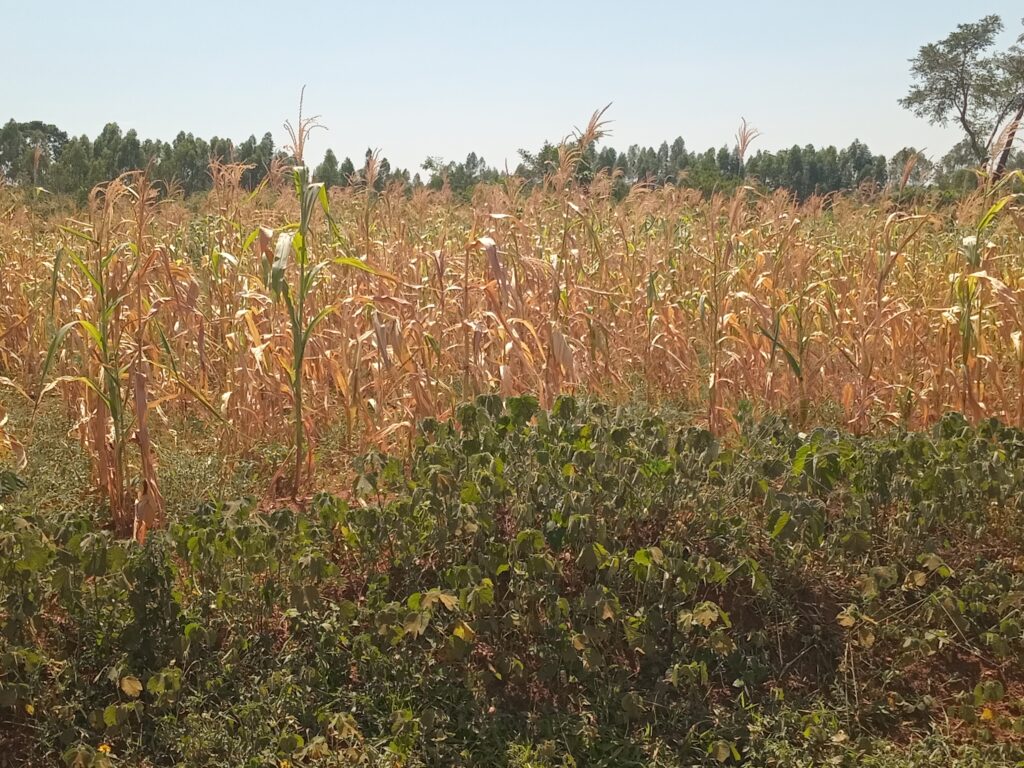
Prolonged drought has devastated maize crops across Kenya’s North Rift, leaving more than 600,000 farmers facing heavy financial losses and raising fears of food shortages and higher maize flour prices.
Farmers in Trans Nzoia, Uasin Gishu, Nandi and neighbouring counties say their crops have dried up before maturity after the failure of the long rains, leaving them with little or no harvest.
The crisis has also left farmers struggling to repay millions of shillings borrowed to finance the current planting season.
Phillip Matui, a farmer in Trans Nzoia County, says he invested more than Sh2.5 million from a bank loan but now has no hope of recovering the money.
“I took a loan of more than Sh2.5 million, and in this situation, I have no hope of getting any returns,” Matui said.
Eliud Kibenei, a farmer in Uasin Gishu, borrowed Sh2 million for maize production and is now calling for government intervention.
Kibenei wants the government to consider waiving farmers’ debts owed to the Agricultural Finance Corporation and other financial institutions to enable them to access fresh credit for the next planting season.
The worsening drought has also renewed calls for investment in irrigation.
Edwin Limo, a farmer from Nandi County, said boreholes in some areas were drying up and urged the government to accelerate the construction of dams to provide reliable water for farming.
Agriculture Principal Secretary Prof. Kiprono Rono acknowledged the severity of the crop losses, saying the government’s projected maize harvest of 80 million bags could be missed.
“We have lost close to 30% of the yields,” Rono said.
He said the government would assess affected farmers and determine how they could be supported, adding that Kenya needed to move from rain-fed to irrigated agriculture.
According to Rono, the government is constructing 50 dams across the country as part of efforts to strengthen irrigation.
Economist Justice Matelong warned that maize production could decline by up to 60 per cent and urged the government to reduce the cost of farm inputs by as much as 50 per cent.
The impact is already raising concerns among consumers and millers.
Dennis Barasa, a miller, warned that declining maize supplies could increase the price of maize flour and force some milling companies to close because of shortages of raw materials.
Youth policy analyst Kasim Swaleh said prolonged food insecurity could also worsen poverty and insecurity in farming communities.
The crisis highlights the growing need for climate-smart agriculture, irrigation, affordable farm inputs and crop diversification as Kenya seeks to protect its food basket from increasingly unpredictable weather patterns.