BEYOND THE DEGREE: GRADUATE TURNS MOUNTAIN BIKE REPAIR SKILLS INTO A BUSINESS
GACHIE, KIAMBU COUNTY – For many university graduates, completing a degree marks the beginning of a search for formal employment. But for Evans Kimani, the journey took a different direction. Instead of following the conventional career path, he returned to a technical training institution, acquired mountain bike repair skills and turned them into a business in Gachie.
Kimani’s experience highlights the growing importance of Technical and Vocational Education and Training (TVET) in equipping young people with practical skills, encouraging entrepreneurship and creating alternative employment opportunities.
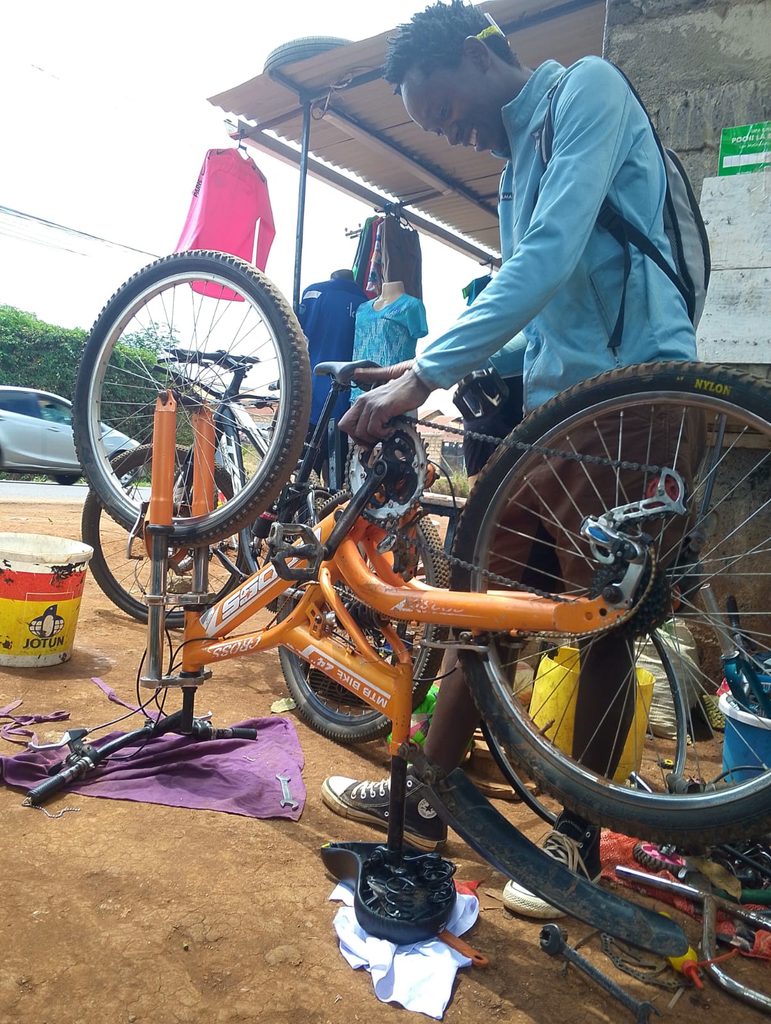
Evans Kimani works on a mountain bicycle, applying practical repair skills developed through technical training.
A different path after university
After completing his university education, Evans Kimani made the decision to enrol in a technical training institution to study mountain bike repair.
His decision marked a shift from the conventional expectation that university graduates should immediately seek employment related to their academic qualifications.
Through the course, Kimani gained practical knowledge and experience in bicycle maintenance, servicing, identifying mechanical problems and repairing different bicycle components.
The training provided him with an opportunity to develop hands-on skills that could be applied to meet the needs of bicycle owners in the community.
Turning practical skills into a business
After successfully completing his training, Kimani decided to put his newly acquired skills into practice by establishing a bicycle repair shop in Gachie.
The business provides bicycle owners with a place to seek repair and maintenance services, turning his technical knowledge into an opportunity for self-employment.
Rather than waiting for formal employment, Kimani chose to create an opportunity for himself by using the skills he had acquired during his training.
His journey demonstrates how technical education can provide graduates with practical alternatives for earning a living and establishing small businesses.
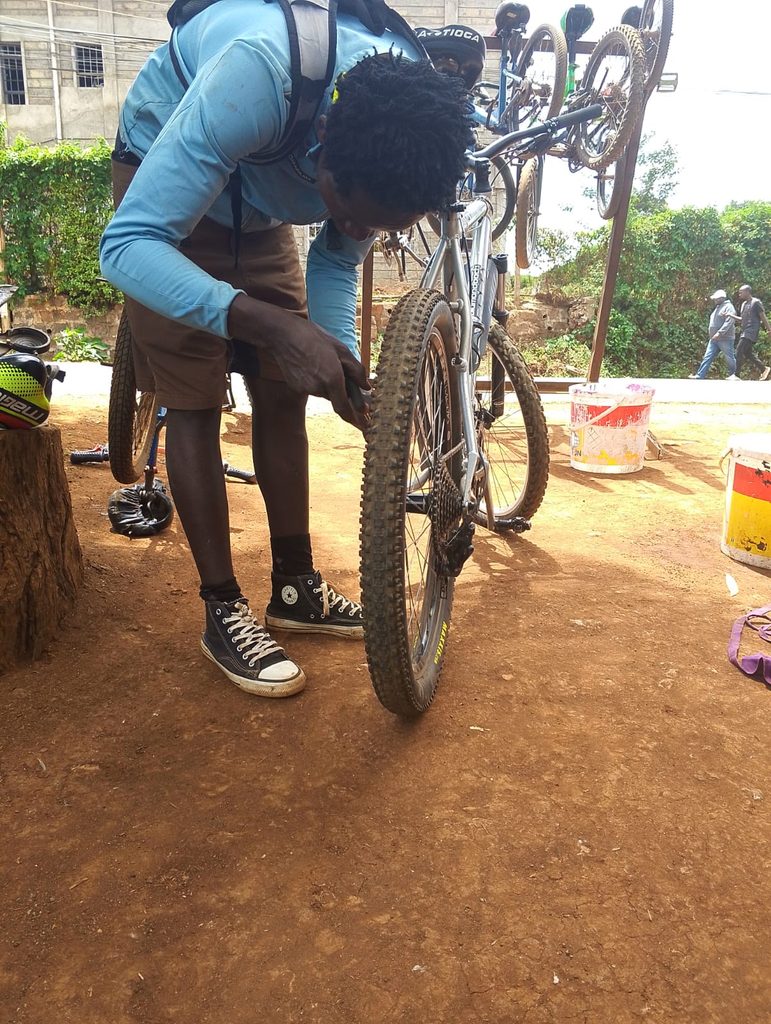
Evans Kimani attends to a customer’s mountain bicycle at his repair shop in Gachie, where he has transformed technical training into a self-employment opportunity
The value of technical and vocational training
Kimani’s experience reflects the role of Technical and Vocational Education and Training in bridging the gap between classroom learning and the practical demands of the world of work.
TVET institutions provide learners with industry-oriented skills that can help them secure employment or establish their own enterprises.
For young people facing an increasingly competitive job market, acquiring practical skills can open doors to opportunities beyond traditional academic qualifications.
His decision to return to technical training after university also challenges the perception that vocational education is only meant for individuals who have not pursued higher education.
Challenging traditional career expectations
In a society where university education is often associated with professional office jobs, Kimani’s journey presents a different perspective on career development.
His decision to pursue mountain bike repair shows that education does not necessarily have to end with a university degree.
Instead, continuous learning and skills development can help individuals discover new interests, respond to market needs and explore different career opportunities.
His story also demonstrates that success can take different forms, including entrepreneurship and the ability to create employment through practical skills.
A lesson for young graduates
As Kenya continues to address youth unemployment, Kimani’s experience offers an example of how technical training can complement university education.
His journey illustrates the importance of being open to learning new skills, exploring different career paths and identifying opportunities within local communities.
For graduates who may be struggling to secure formal employment, vocational training can provide an additional route towards economic independence.
Beyond the degree
Evans Kimani’s journey is a reminder that a university degree does not have to define the limits of one’s career.
By returning to a technical institution, learning mountain bike repair and establishing a business in Gachie, he has demonstrated how practical skills can be transformed into an entrepreneurial opportunity.
His experience reinforces the value of TVET in empowering young people to become not only job seekers but also job creators.
Ultimately, his story shows that sometimes the next step after graduation is not necessarily looking for a job, but learning a new skill and creating an opportunity.