INVESTIGATIVE FEATURE STORY PROJECT
TOPIC: COUNTERFEIT ALCOHOL IN KENYA
INSTITUTION: KENYA SCHOOL OF TVET
STUDENT: PATIENCE JEMIMAH
FAKE BOOZE, REAL DANGER
Behind the familiar labels and attractive bottles lies an illegal alcohol trade that threatens lives, cheats consumers and raises serious questions about enforcement in Kenya.
A bottle of alcohol displayed neatly on a shop shelf may look harmless. Its label may be familiar, its seal may appear intact and its price may seem like a bargain. But what if the drink inside is not what the bottle claims to be?
For many Kenyans, buying alcohol is an ordinary activity. However, behind the growing trade in counterfeit alcoholic beverages lies a dangerous business involving imitation brands, illegal packaging, suspicious excise stamps and unregulated production.
The concern is not simply about people drinking alcohol. It is about consumers unknowingly purchasing products whose ingredients, manufacturing conditions and safety cannot be trusted.
Kenya has repeatedly conducted enforcement operations against illegal alcohol businesses, yet reports of seizures continue to emerge from different parts of the country.
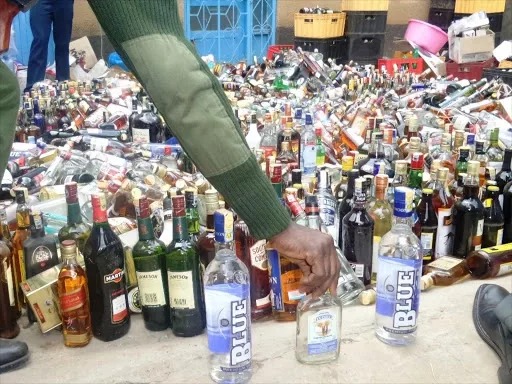
Kenyan police officers inspecting seized counterfeit alcohol bottles
In June 2024, a multi-agency security team discovered an illegal distillery in Muguga, Gatuanyaga, Kiambu County. According to Kenya News Agency, officers recovered more than 700 litres of illicit brew, ethanol, empty bottles and branded cartons. The premises had reportedly been operating under the appearance of an animal-feed manufacturing plant. The discovery raised questions about how illegal production facilities can operate without attracting attention.
The discovery points to an important question: how many other illegal production facilities remain undetected?
The business behind the bottle
Counterfeit alcohol is not always sold in obviously suspicious containers. Some illegal operators imitate established brands by using similar labels, bottle shapes and packaging.
In some cases, genuine bottles are reportedly reused and refilled with unregulated products. Fake excise stamps can also be used to create the impression that the products have passed the necessary tax and regulatory processes.
A report published by Citizen Digital on November 18, 2023, revealed that detectives recovered more than 2,500 bottles of counterfeit spirits, 24,000 suspected counterfeit KRA stamps and 40 litres of ethanol during an operation in Juja, Kiambu County.
The discovery suggests that the illegal trade may involve more than the simple preparation of alcoholic drinks. Packaging materials, counterfeit tax stamps and distribution arrangements can also form part of the business.
The existence of these materials raises another concern: how do illegal products move from production premises to the shelves of retail outlets?
This is one of the most important questions that enforcement agencies and legitimate distributors need to address.
The price of a dangerous bargain
One of the factors that may attract consumers to counterfeit alcohol is price. When a product is sold significantly below its normal market price, some buyers may be tempted to purchase it without questioning its origin.
However, a cheap bottle can carry a costly consequence.
Illegally manufactured alcohol may contain substances or concentrations that have not been properly tested. Methanol contamination is particularly dangerous because it can cause severe poisoning, blindness and death.
Consumers should also understand that not every cheap alcoholic product is counterfeit. Price alone cannot establish whether a product is genuine or fake.
The real danger is that an ordinary consumer may not have the equipment or knowledge required to establish what is inside a suspicious bottle.
The enforcement question
Government agencies have continued conducting operations, making arrests and seizing suspected counterfeit products.
In January 2026, the Anti-Counterfeit Authority announced the seizure of suspected counterfeit alcoholic beverages worth approximately KSh 7.6 million from a residential property in Pioneer Estate, Eldoret. The operation recovered 1,525 cartons of suspected counterfeit alcohol.
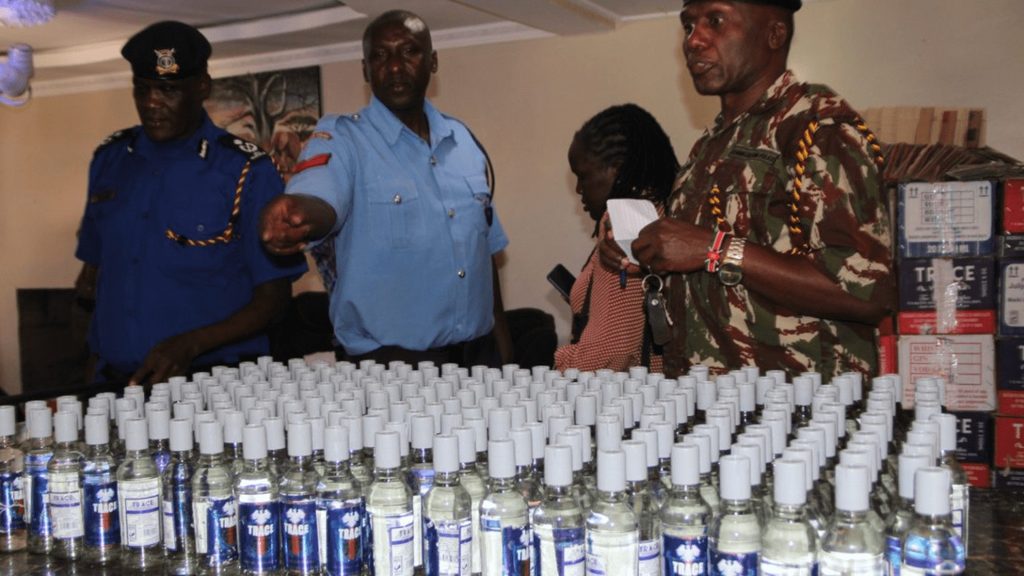
These operations demonstrate that the problem is not restricted to one town or one type of outlet.
But seizures and arrests are only part of the solution. Investigators must also establish who supplies the raw materials, who manufactures the products, who transports them and who ultimately profits from their sale.
There is also a need to establish whether enforcement operations are followed by successful prosecutions and lasting disruption of illegal supply networks.
The public deserves answers about how these products enter the market and whether weaknesses in regulation, monitoring or coordination allow the trade to continue.
A trade that hurts genuine businesses
Counterfeit alcohol does not only threaten consumers. It also creates unfair competition for licensed manufacturers, distributors and retailers who invest in meeting legal requirements.
Genuine businesses may lose customers when illegal operators sell imitation products at lower prices without bearing the same regulatory and tax costs.
The government may also lose revenue through tax evasion, while consumers are left with products whose safety and authenticity are uncertain.
The National Police Service has previously highlighted the wider security and economic consequences of counterfeit and contraband trade.
What should consumers do?
Consumers have an important role in reducing the demand for counterfeit alcohol.
They should purchase alcoholic products from licensed and reputable outlets, check packaging and excise information, avoid suspicious or unlabelled products and report suspected counterfeit goods to the relevant authorities.
However, consumers should not rely on appearance or a QR code alone to establish authenticity. A suspicious product should be reported for proper verification.
Enforcement agencies must also improve public awareness, strengthen investigations, monitor illegal supply chains and cooperate with manufacturers and county authorities.
The unanswered questions
Although several operations have exposed illegal alcohol businesses, important questions remain.
Who finances the illegal production networks? How do counterfeit labels and excise stamps reach manufacturers? Are all distributors properly investigated? What happens to the people behind the operations after the immediate arrests? And how can authorities ensure that seized products do not simply reappear in another market?
These questions deserve answers through transparent investigations, official records and firsthand interviews.
The fight against counterfeit alcohol should not end when police display seized bottles before cameras. It should continue until the networks behind the illegal trade are identified and consumers are protected.
A bottle may carry a familiar name, but that does not guarantee a genuine drink. In the fight against counterfeit alcohol, the greatest danger is not always what consumers can see. It is what they cannot see inside the bottle.
By Patience Jemimah.