Give Blood, Save a Life; How the generosity of strangers can help save mothers during childbirth in Kenya.
By Ian Wafula,
A mother’s life can hang in the balance in the minutes following childbirth. While family members celebrate the arrival of a newborn, somewhere in a maternity ward, another family may be anxiously waiting for blood that could mean the difference between life and death. For Samuel’s family, this is not just a story about maternal health. It is a story of survival, gratitude, and the extraordinary kindness of a stranger.
When Samuel’s mother was giving birth, she needed blood. No family member was nearby to donate, and her life depended on a resource that could not be manufactured or replaced by medicine alone. A stranger stepped forward and donated blood that helped save her life.
The unknown donor may never know the impact of their decision and may never meet the child whose mother survived because of their generosity. A simple act by a stranger became part of a family’s history.
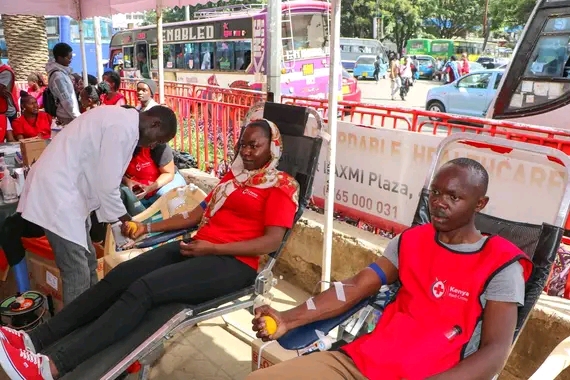
“Today, I donate blood whenever I can, not simply as a health activity, but as a way of commemorating that sacrifice. Every donation is my way of saying thank you to someone whose name I may never know,” Samuel recounts.
Samuel’s mother’s experience reflects an open reality in Kenya, where blood donation remains an essential part of efforts to prevent avoidable maternal deaths.
Pregnancy is often described as a journey of hope, but childbirth can quickly become a medical emergency. One of the most dangerous complications is postpartum haemorrhage (PPH), excessive bleeding after delivery that can cause a woman to lose a lot of blood within a short period of time.
According to Kenya’s Ministry of Health, postpartum haemorrhage accounts for approximately 25–45 per cent of maternal deaths in the country. Kenya’s maternal mortality ratio is estimated at 355 deaths per 100,000 live births, highlighting the continuing challenge of keeping mothers safe during pregnancy and childbirth.
The danger is particularly severe when a woman loses blood faster than the medical team can replace it.
In such circumstances, blood transfusion may be a critical part of emergency treatment. However, its effectiveness depends on timely access to safe, compatible blood and the availability of trained healthcare professionals and appropriate medical equipment.
A 2024 study examining blood use at Kenyatta National Hospital’s maternity unit found that postpartum haemorrage was the most common reason for blood transfusion among maternity patients. The study also highlighted that the need for blood and blood components remained unmet in terms of both quantity and type.
Samuel’s experience has shaped his own understanding of blood donation. It taught him that saving a life does not always require knowing the person in need. Sometimes, it simply requires being willing to help. It is an opportunity to honour that unknown individual and a reminder that another family somewhere may be waiting for the same kind of kindness.
Blood donation is a national need that requires collective action. Kenya continues to face challenges in ensuring adequate blood supplies for patients who need transfusions. The Ministry of Health has repeatedly called on Kenyans to embrace voluntary blood donation, recognising its importance in maternal health, emergency care, surgery, and the treatment of other serious medical conditions. During the 2026 World Blood Donor Day commemorations, the ministry emphasised that safe and adequate blood is essential to quality healthcare.
Haemorrhage being the major cause of maternal complications in Kenya, there is a need for stronger blood transfusion services and county-level blood donation drives. The World Health Organization recommends prompt treatment of postpartum haemorrhage, including measures to control bleeding, medicines, intravenous fluids, and escalation of care where required. Blood transfusion may be necessary for women who have lost significant amounts of blood.
Kenya’s Ministry of Health has also identified blood availability, emergency obstetric care, and referral systems as important areas requiring improvement in efforts to reduce maternal and newborn deaths. This means that the message of blood donation must go hand in hand with improved maternity services, well-equipped health facilities, and public awareness of pregnancy-related emergencies. Every mother deserves access to quality care, regardless of her social or economic circumstances.
The donor who helped Samuel’s mother may never know that their act inspired him to become a regular blood donor. Yet, in a way, their generosity continues through every donation I make. Their gift has become a legacy of compassion.
As Kenya continues to confront preventable maternal deaths, more people need to understand that blood donation is not only an act of charity. It is an investment in the lives of mothers, newborns, and families.
A stranger’s blood helped keep a mother alive. Today, Samuel donates in remembrance of that stranger and in the hope that another mother, somewhere, will get the same chance as his
Behind every blood donation is a possibility: a mother returning home, a child growing up with a parent, and a family given another reason to celebrate.
Give blood. Save a life. You may become the stranger someone will never forget.