TABAKA SOAPSTONE: BEAUTY HEWN FROM STONE
The artwork symbolizes the continuityf life, unity and generations, reflecting the rich cultural heritage and exceptional craftsmanship of Tabaka artisans.

Tabaka lies 23 kilometers from Kisii Town along the Kisii–Migori Highway and is home to a soapstone industry whose history and resilience are deeply intertwined with the people it serves.
In Kisii County’s soapstone quarries, the rhythmic striking of hammer against chisel brings to life a soft, smooth rock that is easily shaped into ornaments, sculptures and household items.
At one shop in Tabaka town, we meet Grace Moraa Otondi, the secretary, sales lady and manager, who welcomes us to tables neatly arranged with soapstone sculptures, bowls, necklaces and other creations.
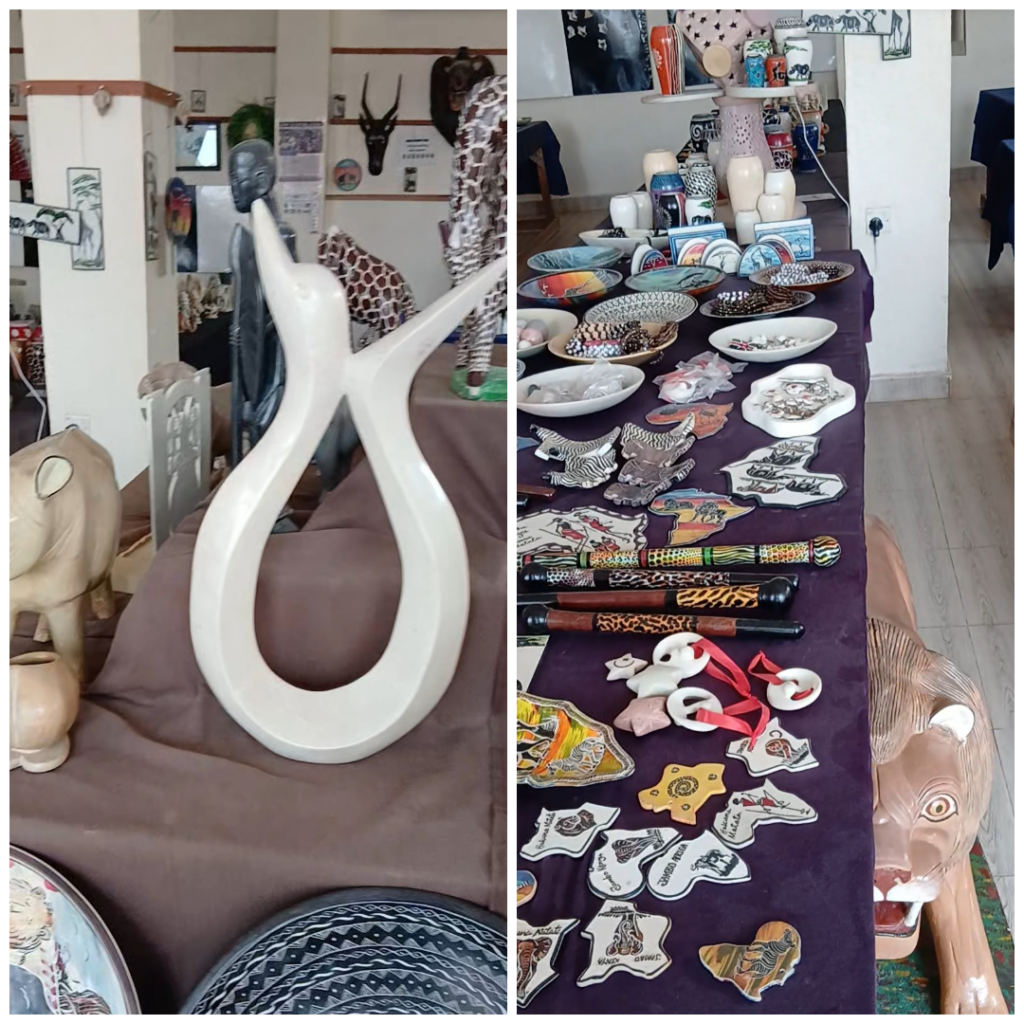
The artwork symbolizes the continuityf life, unity and generations, reflecting the rich cultural heritage and exceptional craftsmanship of Tabaka artisans.
Grace allows us to admire and touch the pieces, some carrying cultural meanings while others transform everyday objects into elegant decorations.
Tabaka’s soapstone is a workable metamorphic rock, mostly cream or white with occasional pink or grey marbling, and can be shaped using simple tools such as chisels, knives and pangas.
Extraction is physically demanding, as miners identify veins, outline blocks with chisels and use hammers and wedges to free the stone without causing unwanted fractures.
Once extracted, the blocks are taken to shaded workshops where artisans gradually shape them using heavy chisels, smaller gouges and rasps before sanding and polishing them to reveal the stone’s natural grain.
Depending on the design, a piece can take a day or several weeks to complete, with products ranging from bowls and mortars to animal sculptures, jewellery and elaborate pieces such as Grace’s “Cycle of life”

“A ‘Cycle of Life’ soapstone sculpture on display
showcases the craftsmanship of Kisii artisans while celebrating
the interconnected stages of human experience”
says, Grace Moraa Otondi.
Soapstone carving is also a living repository of Abagusii culture, with skills passed from elders and parents to younger generations through apprenticeship and family traditions.
Traditional patterns, local wildlife, stylised human forms and symbolic motifs appear in the work, making the craft a source of both identity and livelihood.
The industry supports miners, carvers and polishers as well as traders, transporters and stallholders, while tourism, local markets and established galleries help move the products to Kisii, Nairobi and beyond.
However, artisans face challenges including dangerous manual extraction, limited equipment, low prices for labour-intensive pieces and the growing influence of middlemen who often earn more from the finished products.
Unregulated quarrying also affects the environment through landscape degradation, waste stone and erosion.
Artisans and community leaders propose better safety training, cooperative marketing, support for quality certification and improved tourist infrastructure, including clearer signage, a visitor centre and workshops where tourists can try carving.
Grace’s shop already offers visitors one-day carving sessions, allowing them to learn the craft and leave with pieces they have created themselves.
Despite the challenges, apprenticeships, community exhibitions and growing international interest continue to sustain the industry as artisans adapt designs to changing tourist tastes while preserving larger works for collectors.
For many artisans, however, Tabaka’s greatest value lies beyond income in the memories of learning to carve from parents and elders and in passing that knowledge to future generations.
With investment in safety, sustainable quarry management and cooperative marketing, Tabaka’s soapstone industry can continue supporting livelihoods while protecting a cultural practice rooted deeply in the land.
Visitors may leave with a polished bowl or sculpture, but Tabaka’s enduring story is of a community that has turned its bedrock into art, livelihood and cultural identity, one careful strike at a time.




Such a well written and elaborated story .Its a kind of feature that is very interesting and makes want to visit the tabaka soapstone
Amazing story soon visiting to purchase flower vessel.
Amazing story soon visiting to purchase flower vessel.
A timeless symbol of Kisii heritage, Tabaka soapstone transforms raw rock into exquisite works of art. Through skill, creativity, and dedication, local artisans turn nature’s gift into livelihoods, preserving culture while inspiring prosperity for generations.Indeed this is an amazing story
Woow planning to purchase one soon
this is a must visit 👌🏾
An amazing piece
Never knew about this!
Well presented and addresses the cultural and economic significance of soapstone.
Well presented and addresses cultural and economic significance of soapstone
A very informative article. I have learned how Tabaka soapstone supports livelihoods and preserves the rich culture of the Kisii people.
This is a good piece of work, i wish to invest in the artifacts sometimes, please guide accordingly
Planning to visit and explore the beauty soon
Great work, i just want a piece for my collection. I will keep in touch
It’s quite a nice and impressing blog I will soon visit the place
I like it will like to come see it