BEYOND THE FREQUENCY.
THE UNSCRIPTED JOURNEY OF MUCHINA MALOMBA
A story of ambition, missed opportunities, unexpected detours and the persistence to find a place in broadcasting.
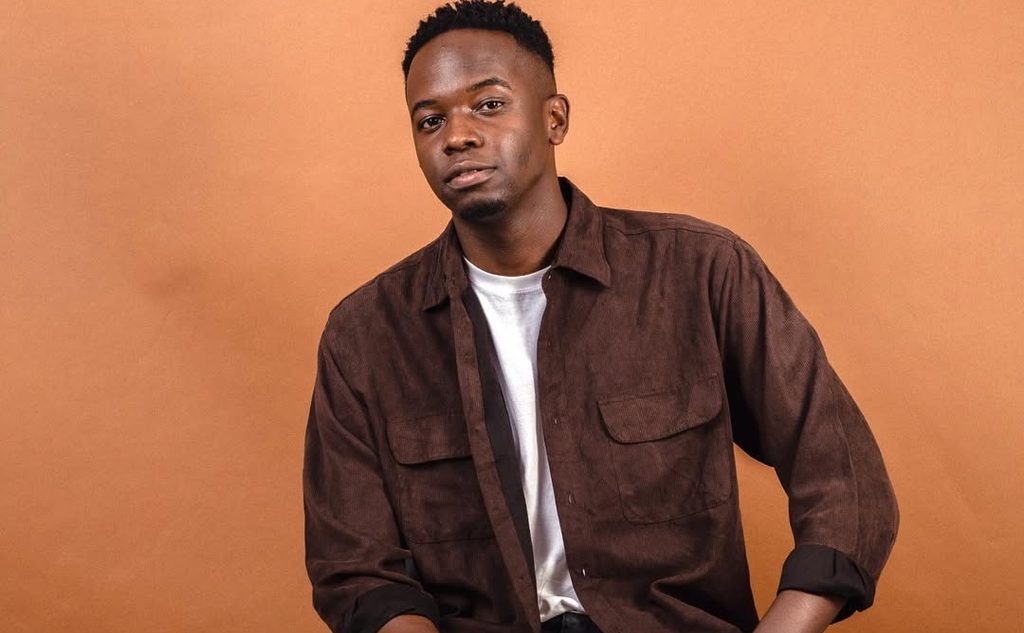
April Fool’s Day is hardly a date one would associate with life-changing news. Yet, on April 1, 2021, Muchina Malomba received a phone call that would mark a turning point in his career. Having endured years of auditions, unpaid internships, professional detours and disappointments, he had reached a point where he was almost ready to abandon broadcasting altogether. In fact, he had already made plans to leave Kenya for Namibia.
When a representative from Radio Africa’s Human Resources department called to inform him that an offer letter was waiting, his first instinct was disbelief. “I know it’s April Fool’s Day, but I’m not in the mood for jokes,” he responded.
It was no joke. After years of pursuing an opportunity that had repeatedly seemed within reach but never quite materialised, Muchina was finally getting his break.
But the journey to Kiss FM was anything but straightforward. Behind that phone call was a story of persistence, missed opportunities, unlikely encounters and a young man determined to build a career in an industry he had come to love, even when circumstances repeatedly suggested otherwise.
Interestingly, his journey into broadcasting began with a rather unpromising academic reputation. In high school, one teacher even went as far as suggesting that his grandmother stop spending money on his education and instead buy him a boda-boda so he could start earning a living.
FINDING A VOICE BEYOND THE CLASSROOM
Muchina was aware that he was not performing particularly well academically, but he believed he had something else to offer. He simply had not discovered what it was.
When he joined high school, he enrolled in the drama club and quickly established himself as a talented member. It was here that he began to recognise an ability that would eventually shape his professional life. He also had a friend in the drama club who later became a presenter at QFM. Having been an average student himself, his friend’s success in broadcasting became a source of inspiration.
After high school, Muchina was determined to pursue Mass Communication. However, the enthusiasm was not universally shared. Those around him considered it a dead-end career, particularly given the limited media landscape at the time. Kenya had only four television stations: KBC, KTN, NTV and Citizen.
The discouragement almost made him reconsider his ambitions. He subsequently applied for culinary arts at Utalii College, driven by his love for cooking, but the opportunity did not materialise.
An unexpected conversation, however, would restore his confidence. During a visit by one of his grandmother’s friends, the two struck up a conversation that ended with a question that stayed with him: “Why are we afraid of the unknown?”
The question challenged his hesitation and encouraged him to take a chance on his original ambition.
He applied for Mass Media at Multimedia University but did not complete even one semester. He later transferred to the Kenya Institute of Mass Communication (KIMC), a decision he remains grateful for because it was there that his passion for radio began to take shape.

Not entirely certain about which direction to take, he settled on Radio Production, assuming he would eventually work behind the scenes. However, his first day in class introduced him to a possibility he had not previously considered.
A lecturer, Mr. Ngetich, was conducting introductions when he noticed something in Muchina’s voice. “You have a good voice; you should try broadcasting,” he told him.
It was an observation nobody had made before, and it immediately sparked his curiosity. Rather than limiting himself to production, Muchina became interested in understanding the broadcasting side of radio.
LEARNING THE ROPES AT KIMC
KIMC had its own radio station, ECN, which remains operational to date. However, getting an opportunity as a first-year student was not easy.
Together with his friend James, a colleague at Radio Africa, and another friend, Sarah Akech, Muchina began recording demonstration clips using his phone. They did this repeatedly, working on their presentation and preparing for an opportunity to audition. Their persistence eventually paid off. They auditioned for ECN and were selected.
Muchina began as a news reporter before progressing to become a news presenter. He later secured his own programme, The Late Night Show, and continued growing within the station. His responsibilities expanded further when he became head of the news department.

By the time he left ECN Radio, he was serving as its deputy head. For someone who had initially enrolled in Radio Production with the intention of remaining behind the scenes, the experience marked a significant shift in his professional development.
His next opportunity came through an attachment at Hot 96 FM. He was particularly excited because he was the only student in his class who had missed out on securing an attachment.
He embraced the experience, eager to learn as much as possible. By the end of his attachment, his boss informed him that there was an opening for a news presenter and encouraged him to apply.
There was, however, a complication: Muchina was still in his second year of study. He remembered a warning from his lecturer, who had cautioned him that taking up the job could jeopardise his chances of graduating the following year. Faced with the difficult choice between an immediate employment opportunity and completing his education, he decided to let the job go and concentrate on finishing school.
It was a difficult decision, but it would not be the last time he had to choose between an opportunity and the circumstances surrounding it.
WHEN OPPORTUNITIES CAME CLOSE, BUT NOT QUITE CLOSE ENOUGH
While still at KIMC, Muchina also secured an opportunity to participate in a presentation competition at Nation FM. Two students from every university and college were competing for a chance to become presenters, and he was selected to represent KIMC.
It was an exciting experience, although the station eventually shut down for approximately a year. He also participated in a presentation competition at Family Radio, but despite making the effort, he never received a response.
By this point, his focus had shifted beyond simply gaining experience. He wanted a job in radio and was willing to pursue any available opportunity.
After completing his final examinations, he returned home and applied for an internship at Urban Radio in Kisumu. The station was a considerable distance from his home in Bungoma, but the geographical challenge did not deter him.
He travelled for an interview on a Friday and was asked to report to work the following Monday. The excitement of securing the opportunity was quickly met by a practical problem: he had no money for transport.
A friend of his aunt came to his aid and offered to accommodate him in a hotel for an entire month. With that support, Muchina was able to take up the internship.
He worked at Urban Radio for a month before deciding to leave. He had been staying with a stranger, a situation that eventually became difficult to sustain. He returned to Nairobi to attend his graduation.
After graduating, he and his friends applied for positions at Ghetto FM. In a surprising turn of events, all of them were hired. However, the opportunity came without pay.

Muchina hosted the breakfast show, but the financial reality was becoming increasingly difficult. He was tired of repeatedly asking his parents for money and was also living at his aunt’s residence in Lang’ata. Eventually, after six months, he left Ghetto FM and took up a job as a customer service agent.
The move away from radio did not necessarily mean that his ambitions had changed. Rather, it reflected the need to find a more sustainable way of earning a living.
In 2017, he decided to save money and relocate to Tanzania, having struggled to find employment opportunities in Kenya. Raising the money for the move required creativity and hard work. Among his income-generating activities was selling smokies in offices.
Even as he worked towards a fresh start, the broadcasting industry continued to present occasional possibilities.
Around this time, Radio Africa was recruiting presenters for Radio Jambo. Muchina attended the interviews, and after the first round, he was informed that he would be progressing to another interview.
He was almost ready to travel to the United Kingdom when an email from Radio Africa’s Human Resources department arrived. They wanted him back for a second interview because they urgently needed someone.
He returned for the interview, but his plans to move to Tanzania were already underway.
A CAREER ACROSS BORDERS
After travelling to Tanzania, Radio Africa contacted Muchina again regarding another opportunity. Although he was going through a difficult period, he decided to explore it.
While in Tanzania, he secured an opportunity to work at Classic FM, an English radio station, for approximately a month. The experience was rewarding, although he was not paid.
When he eventually returned to Kenya, he resumed his search for a permanent broadcasting opportunity. He applied to 1FM, Homeboyz and several other radio stations, but none resulted in an offer.
Customer service also seemed determined to remain part of his professional journey. Another opportunity in the field emerged, and he applied and was selected.

Still unwilling to abandon broadcasting, Muchina extended his job search beyond Kenya. He contacted several radio stations in Dubai and was informed that they could offer him a six-month internship if he could make his way there.
The possibilities were there, but none had yet translated into the stable broadcasting career he desired.
By the time he was 27, Muchina had never been formally employed in a job he genuinely loved. Years of trying, waiting and pursuing opportunities had not produced the breakthrough he had hoped for.
Then Radio Africa announced another recruitment drive for presenters. This time, he was not particularly interested. He had not planned to apply, having grown increasingly weary of the process. But a friend encouraged him to submit an application, reminding him that there was nothing to lose. It was the final day for applications, and he eventually applied.
Two weeks later, a lady called while he was asleep and informed him that he was expected at an interview. The timing caught him off guard. He asked whether the interview could be rescheduled, but the request was declined.
He broke down and cried. Having waited so long for an opportunity to present himself, he felt that another chance had been taken away before he could even make his case. To make matters worse, he had never been informed of the interview time beforehand.
It was a particularly discouraging moment, but a friend offered him a different perspective. “If something is meant for you, it will find you,” the friend told him.
THE JOURNEY TO WAIYAKI WAY
At this stage, Muchina was already considering relocating to Namibia to start afresh. However, another friend encouraged him to visit the Radio Africa offices along Waiyaki Way rather than walk away from the opportunity altogether.
He took a boda-boda from Rongai to the offices. Upon arrival, he met a lady who informed him that the interview panelists were waiting for him. For Muchina, the moment felt significant. After everything that had happened, he could hardly believe that he had finally made it to the interview room.
“I know it’s April Fool’s Day, but I’m not in the mood for jokes.”
He recalls telling the panelists, “Nothing is working in my life, and if this interview doesn’t work out, I’m going to Namibia to stay alone.” There was also an unexpected moment of recognition. One of the panelists remembered him from an earlier recruitment process and asked whether he was the same candidate they had previously called for a job, but who had declined and travelled to the United Kingdom before moving to Tanzania.
The recognition brought his rather unusual career journey into the room with him. Two weeks later, he received a call inviting him for a second interview. This time, he attended with his friend.
The recruitment process progressed to a third interview, where he encountered people he had long admired in the industry, including Maina Kageni and Shaffie Weru. They welcomed the candidates to the family.
The candidates also participated in a live demonstration and were informed that they would be contacted again.
By then, however, Muchina was exhausted. The repeated interviews, waiting periods and uncertainty had taken their toll. On April 1, 2021, he had already planned to quit his job and relocate to Namibia.
Then came the call. “Hey, are you Muchina? We have an offer letter for you. Are you interested?” The caller was from Radio Africa’s Human Resources department. Still unsure whether to believe what he was hearing, he responded, “I know it’s April Fool’s Day, but I’m not in the mood for jokes.”
The lady laughed and reassured him that she was indeed calling from Radio Africa. She wanted him to come and check his offer letter. Muchina cried. After coming close to giving up on a dream he had pursued for years, he had finally received the opportunity he had been waiting for.
It was his first radio job.
FROM MALOKO TO KISS BREAKFAST
Joining Kiss FM marked the beginning of a new chapter in Muchina’s broadcasting career. He initially hosted Maloko, a weekday show that aired from Monday to Friday, between 10 a.m. and 12 noon.
His journey at the station would later take another significant turn when he was moved to host Kiss Breakfast. He considers this one of the biggest achievements of his time at Kiss FM and Radio Africa in general.
Sharing the breakfast show with his favourite co-host, Cyd Wambui, was an especially memorable part of the experience. For someone who had spent years trying to secure a place in radio, moving from an intern and aspiring presenter to hosting a breakfast show represented a significant professional milestone.
Yet, even after establishing himself in broadcasting, Muchina’s interests continued to evolve.
Early last year, he made the decision to leave Kiss FM and focus on creating travel content, opening another chapter in his professional journey.
His story is a reminder that careers, particularly in creative industries, rarely follow a predictable trajectory. His path involved changing institutions, crossing borders, accepting unpaid opportunities, taking up jobs outside his preferred field and repeatedly returning to a dream that seemed determined to remain just out of reach.
From a high-school student whose academic performance prompted a teacher to question the value of investing in his education, to a KIMC graduate who rose through the ranks at ECN Radio, and eventually to a presenter at Kiss FM, Muchina’s journey has been anything but conventional.
Perhaps the most remarkable part is that the opportunity that finally opened the door came when he was preparing to walk away.
And on a day when almost everyone expects a joke, the call that changed his life turned out to be anything but one.